
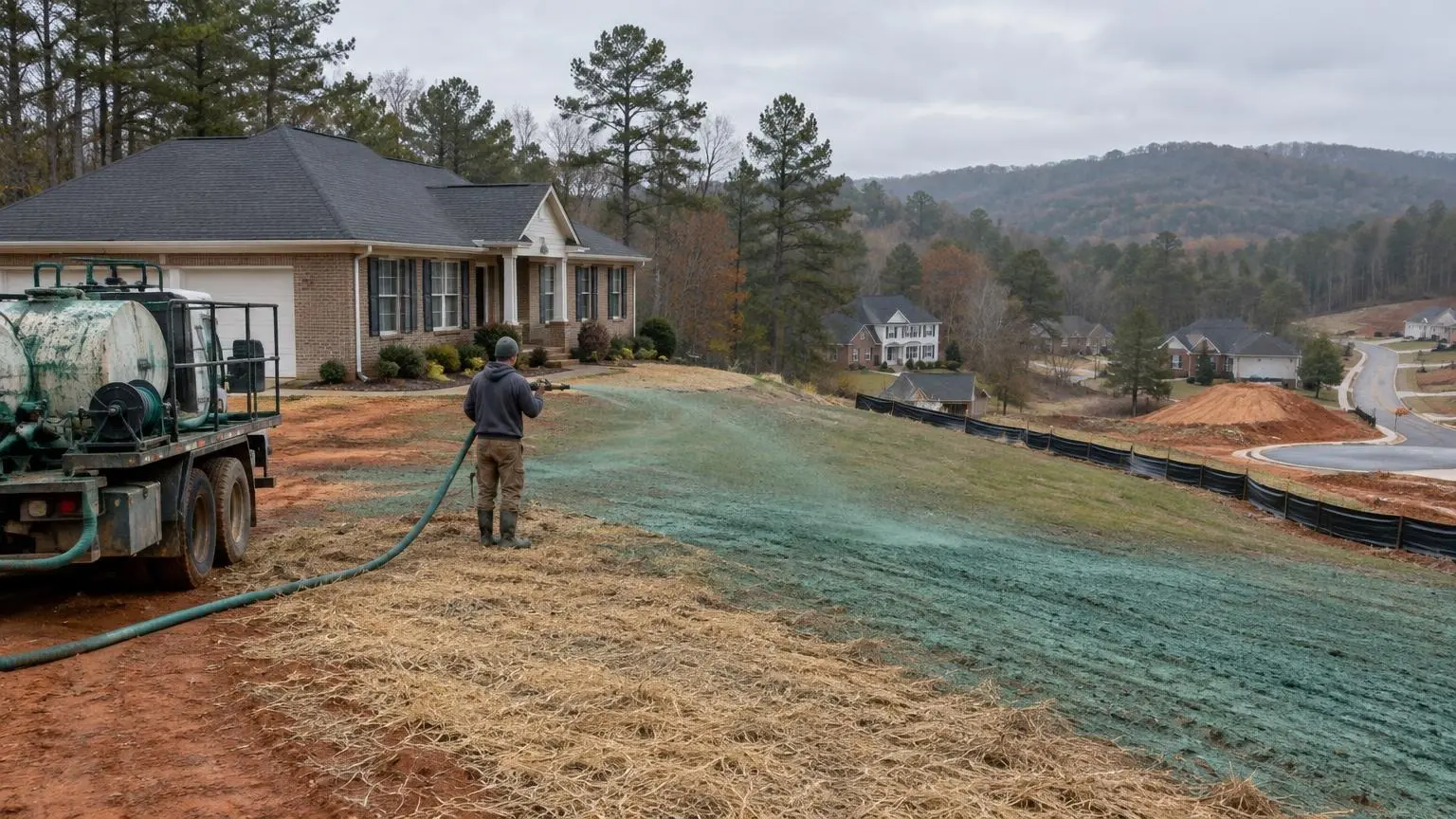
Dirt work before seed
Yard Grading & Red Clay Prep in Greensboro, NC
Shaping, loosening and topsoiling Piedmont clay so grass has something to root into.
- No-charge visit to the property and an itemized quote in writing
- Seed mixes and timing matched to Piedmont clay and tall fescue season
- Silt fence and seeding planned around the state's 21-day stabilization rule
The Work Under a Good Lawn
Yard grading and red clay prep in Greensboro is the part of a lawn nobody sees and the part that decides whether it lasts. A yard that holds water against the foundation, slopes the wrong way, or is packed hard from construction will fight any seed you put on it. We handle the dirt work before seeding: rough and fine grading, compaction relief, topsoil spreading and the small drainage fixes that keep water moving.
Why Piedmont clay needs prep
Cecil soil, the state soil and the dominant soil around the Triad, has a shallow brown sandy loam on top and red clay below that can run several feet deep. Many acres lost that sandy topsoil to erosion during decades of farming, and new-construction grading often strips what is left. The clay underneath is good for building on, but it has little ability to recover from compaction once heavy equipment has packed it down. It is also naturally acidic. A lawn sprayed straight onto that surface usually comes in thin and stays thin.
Grading for drainage
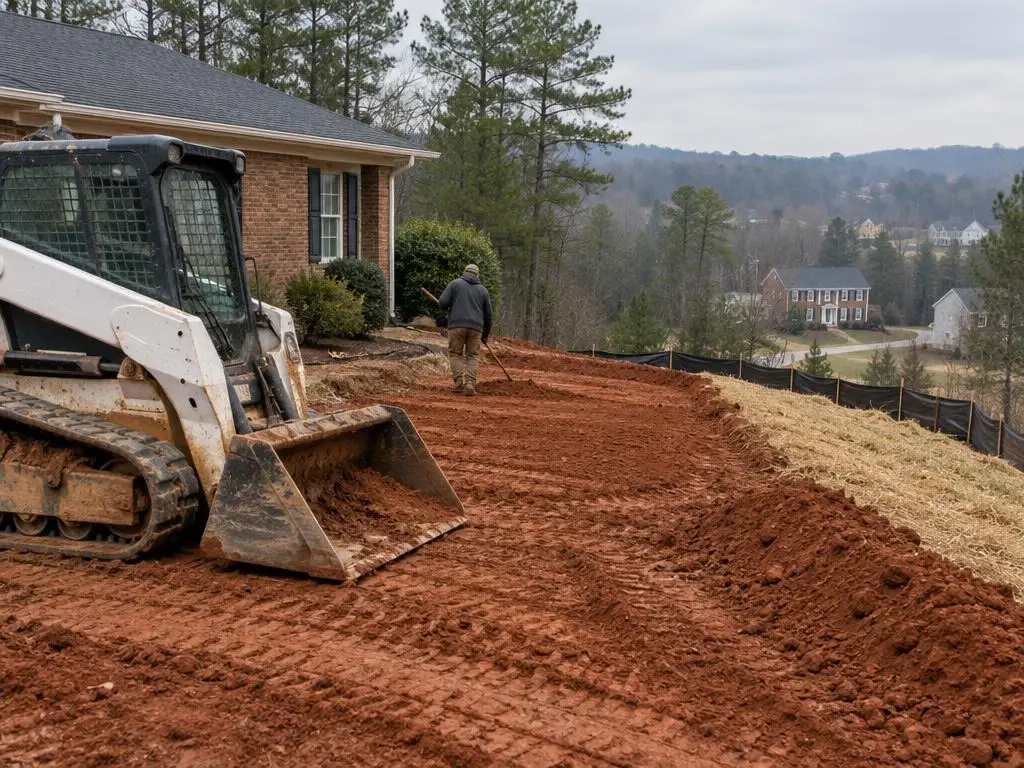
NC State Extension recommends a 2 to 3 percent slope away from buildings for proper drainage, with the subsoil shaped to the final contour first and topsoil spread evenly over it. That is the order we work in. Rough grading sets the shape and fixes low spots, reverse slopes and washouts. Fine grading smooths the surface and sets the final fall so water leaves the yard without cutting channels. On larger lots this land grading can include shaping swales, filling ruts and building up areas around trees with care.
Topsoil
When the original topsoil is gone, we bring in screened topsoil and spread it over the loosened clay. NC State notes that a builder grading a lot should strip and stockpile the topsoil, usually 4 to 8 inches, and put it back after grading; when that did not happen, new topsoil is the fix. Extension also warns that imported soil can carry weed seed, so we use screened material and look at it before it goes down.
Compaction relief and soil amendment
Where equipment has packed the clay, we rip or till the surface before topsoil goes on so the two layers bond instead of sitting like a lid on a box. If a soil test calls for lime, it gets worked in during this step, since NC State recommends incorporating lime and fertilizer into the top 6 to 8 inches when establishing a lawn.
Excavation and trenching for drainage
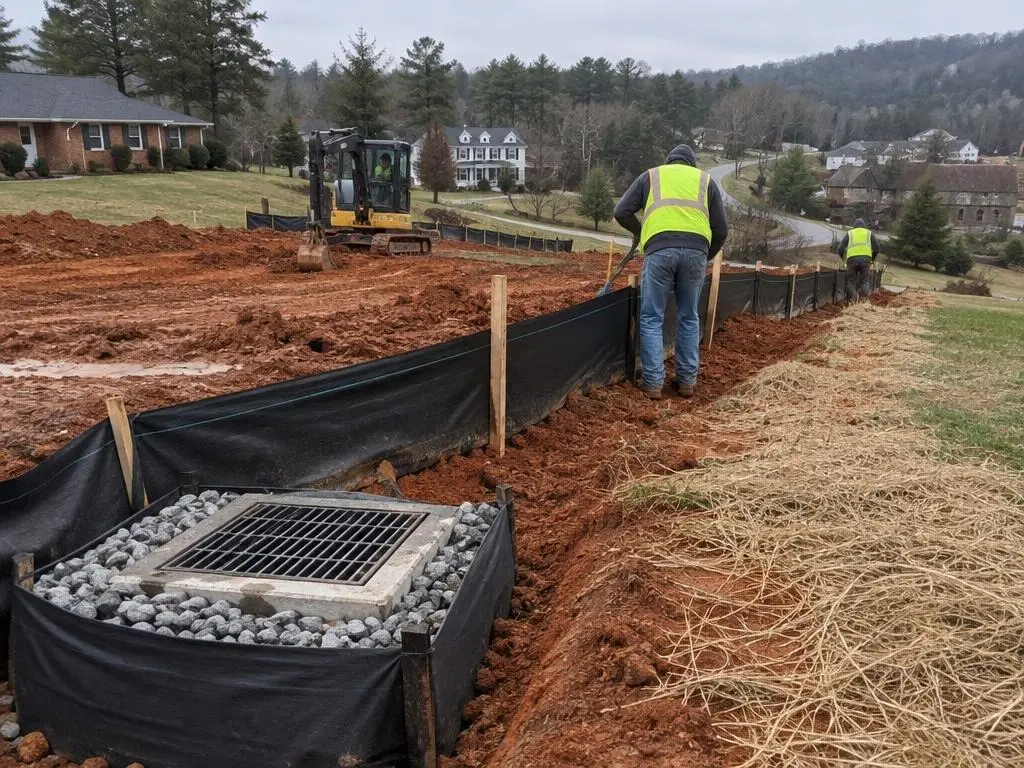
Some yards need more than a better grade. Our grading crew also handles excavation and trenching for drainage, such as shallow French drains, downspout extensions and swale cuts, when the fix is within a residential scale. Before any digging, we have underground utilities located. Bigger jobs, such as retaining walls, basement waterproofing or deep storm lines, belong to other trades, and we will say so.
Permits and bare ground
Grading is land disturbance. North Carolina requires erosion and sediment control for land-disturbing work regardless of size, and an approved plan once more than an acre is disturbed. Even on small yards, we put silt fence on the low side when soil could reach a street or a neighbor's lot, and we seed right after grading so the clay is not left bare through a storm. Get a free estimate
Signs your yard needs grading before seed
Some yards can go straight to seed with light prep. Others need dirt work first. Water that stands near the foundation for a day after rain, a yard that slopes toward the house, ruts left by equipment, gullies cut by downspouts, and spots where you cannot push a screwdriver into the soil are all signs. So is red clay showing through a lawn that never filled in. Any of these will undermine new grass, and fixing them after seeding means tearing up the lawn. We would rather spend an extra day on yard grading and topsoil than have you pay to seed twice.
What happens to the extra soil
Grading moves soil around the lot more often than it removes it. When there is extra material, we try to use it to fill low spots or build up areas that need it. When there is not enough, we bring in screened fill or topsoil. Either way, the estimate lists what is coming in or going out.
Around trees
Greensboro has a lot of mature shade trees, and grading near them takes care. Burying roots under several inches of new fill or cutting through them with a grading bucket can kill a tree slowly. NC State Extension advises building protective walls to save trees if the final grade will be appreciably higher than the present level. We grade lightly inside the drip line and bring in only thin topsoil there.
Dirt Work Before Seeding
From a few low spots to a full-yard regrade.
Rough grading
Reshaping the yard to move water away from the house and fill low spots.
Fine grading
Smoothing and setting the final surface right before seed.
Compaction relief
Ripping or tilling clay that has been packed by trucks and equipment.
Topsoil delivery and spreading
Screened topsoil placed and leveled over loosened subsoil.
Lime and soil amendment
Soil-test-based lime worked into the top layer of acidic clay.
Drainage trenching
Shallow drains, downspout lines and swales cut as part of the grade.
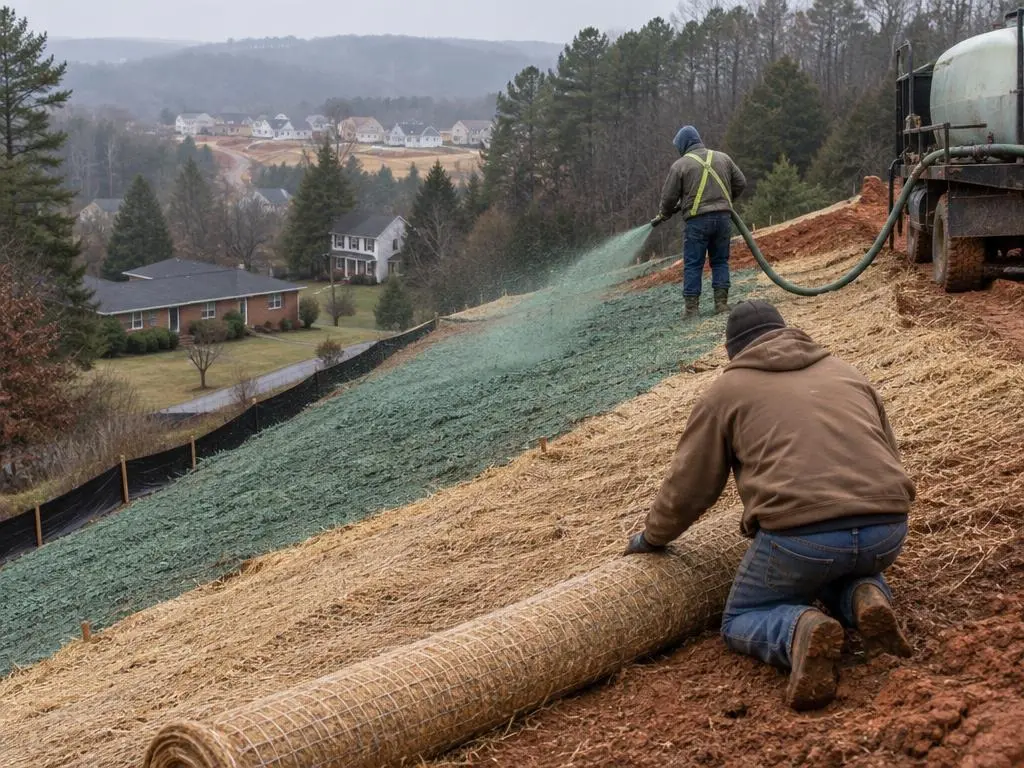
Grading and Topsoil Price Ranges
| Item | Published range |
|---|---|
| Lawn leveling, per sq ft (HomeAdvisor, 2026) | $1 to $2 |
| Resloping, residential project (Lawn Love, 2026) | $770 to $3,000 |
| Fine grading, per sq ft (Lawn Love, 2026) | $0.08 to $1.00 |
| Topsoil, per cubic yard (Angi, 2026) | $10 to $55 |
| Hauling charge for one truckload of topsoil, 15 cubic yards or less (Angi, 2026) | $50 to $150 |
| Spreading labor, per hour (Angi, 2026) | $60 to $125 |
National consumer cost guides; topsoil material, delivery and spreading are priced separately in these sources. Your signed quote sets what you pay.
How Prep Work Goes
1. Assess
We check the grade, low spots, compaction and how much topsoil is left.
2. Locate utilities
Underground lines are marked before any digging or ripping.
3. Rough grade and drain
Shape the subsoil, fix low spots and cut any drainage.
4. Loosen and topsoil
Rip compacted clay, add lime if needed and spread topsoil.
5. Fine grade and seed
Final smoothing, then hydroseed so the soil is not left bare.
Why Choose Us for Yard Grading & Red Clay Prep
Grading and seed together
No gap between the dirt work and the seed for a storm to wash out.
Clay experience
We plan for compaction and acidity instead of discovering them after seed fails.
Clear scope
We tell you which drainage fixes we handle and which need another trade.
Yard Grading & Red Clay Prep Questions
Can you just spread topsoil over hard clay?
You can, but it works poorly. Topsoil over packed clay creates a layer that roots and water stop at. Loosen the clay first, then spread topsoil so the two blend.
How much slope should my yard have?
NC State Extension recommends about a 2 to 3 percent fall away from buildings, roughly a quarter inch per foot.
Do you handle drainage problems?
Many, yes: regrading, shallow French drains, downspout lines and swales. Deep storm lines, walls and foundation waterproofing go to other specialists.
How deep should topsoil be for a new lawn?
Most new lawns do well with several inches of good topsoil over loosened subsoil; NC State notes typical stripped topsoil runs 4 to 8 inches. We recommend a depth after seeing your soil.
Yard Grading & Red Clay Prep Service Areas
- Hydroseeding in Greensboro, NC
- Hydroseeding in High Point, NC
- Hydroseeding in Summerfield, NC
- Hydroseeding in Oak Ridge, NC
- Hydroseeding in Stokesdale, NC
- Hydroseeding in Jamestown, NC
- Hydroseeding in Kernersville, NC
- Hydroseeding in Winston-Salem, NC
- Hydroseeding in Clemmons, NC
- Hydroseeding in Burlington, NC
- Hydroseeding in Graham, NC
- Hydroseeding in Gibsonville, NC
- Hydroseeding in Elon, NC
- Hydroseeding in Archdale, NC
- Hydroseeding in Thomasville, NC
- Hydroseeding in Lexington, NC
- Hydroseeding in Asheboro, NC
- Hydroseeding in Randleman, NC
- Hydroseeding in Reidsville, NC
- Hydroseeding in Eden, NC
- Hydroseeding in King, NC
- Hydroseeding in Bermuda Run, NC
Get a Yard Grading & Red Clay Prep Estimate
Free grading and soil prep estimates in Greensboro.