
Lots, pads and site work
Builder Lot & Commercial Seeding in Greensboro, NC
Fast cover for graded ground, scheduled around inspections, phases and North Carolina's stabilization deadlines.
- No-charge visit to the property and an itemized quote in writing
- Seed mixes and timing matched to Piedmont clay and tall fescue season
- Silt fence and seeding planned around the state's 21-day stabilization rule
Getting Disturbed Ground Covered on Time
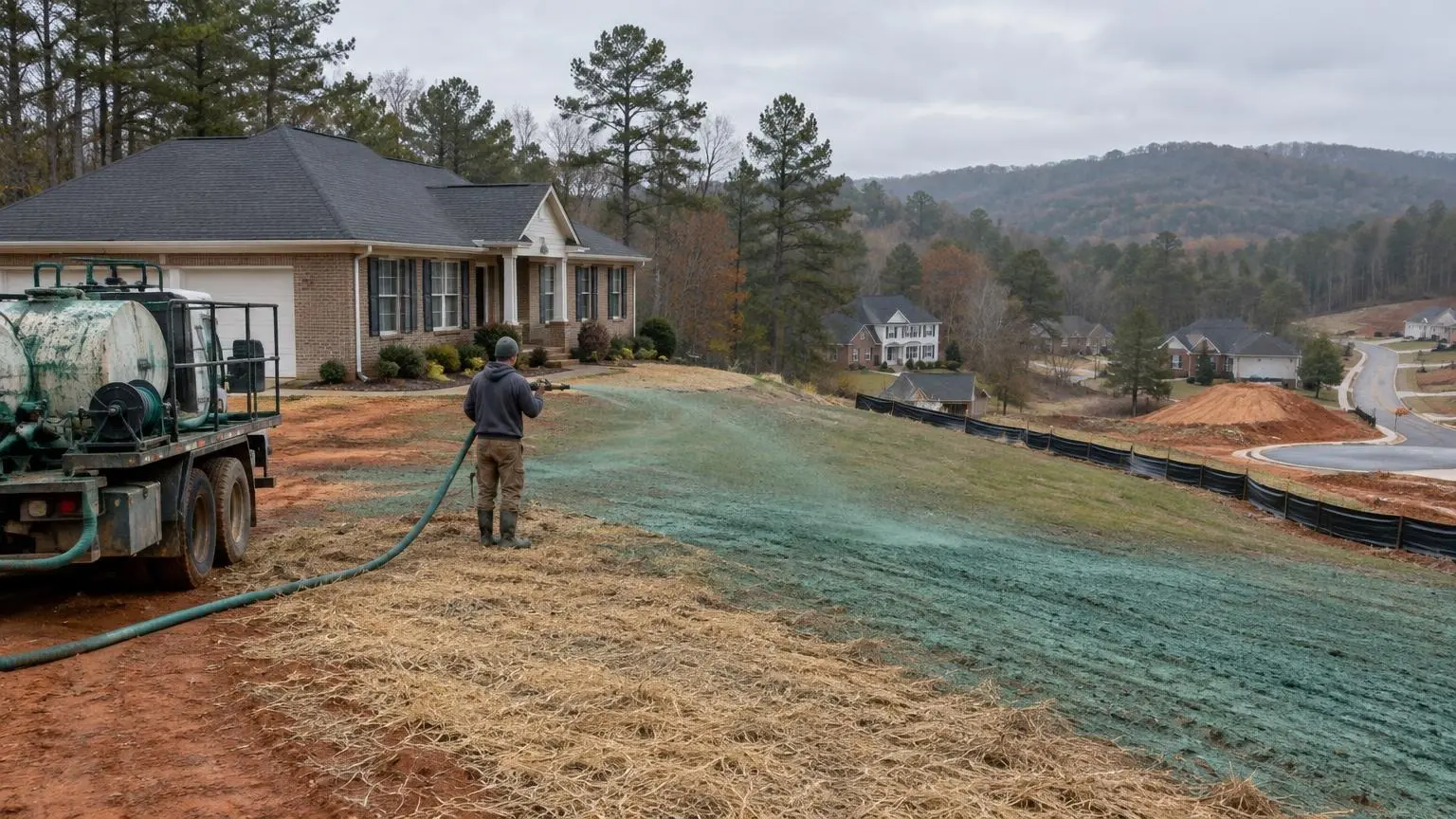
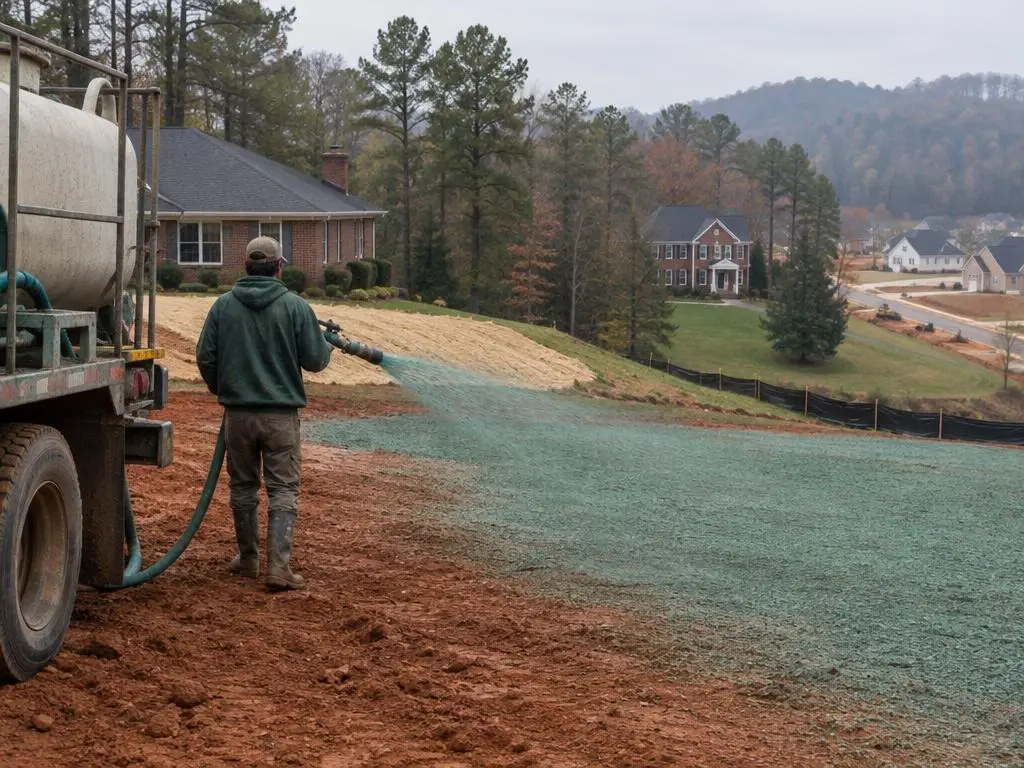
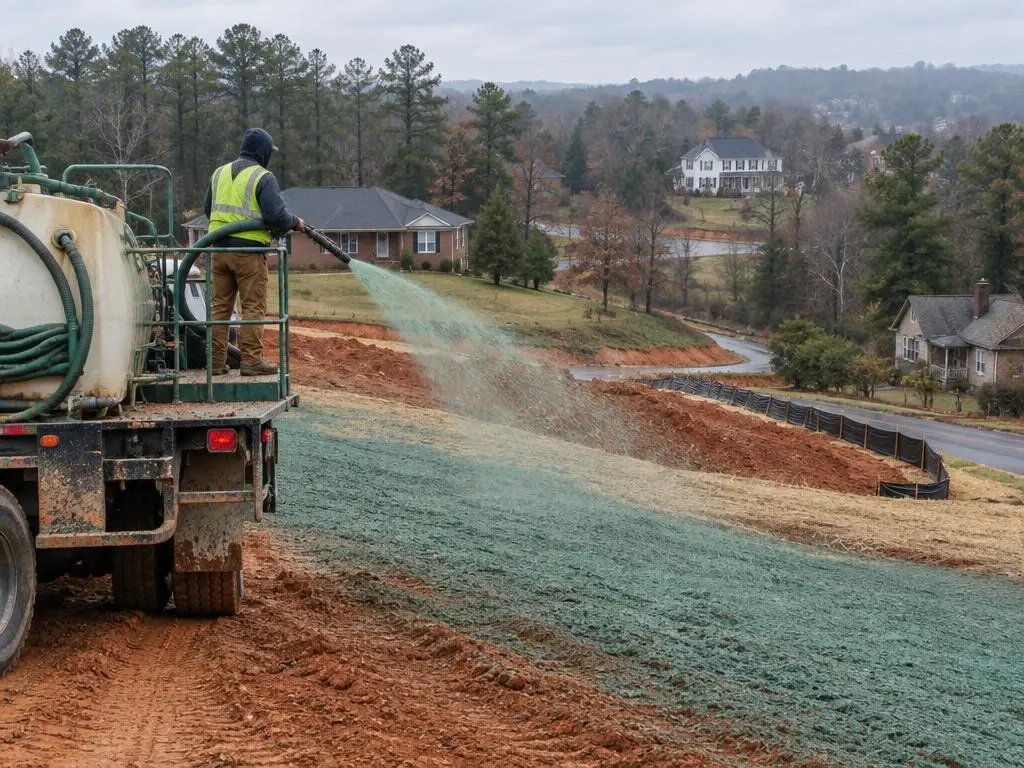
Builder lot and commercial seeding in Greensboro is about deadlines as much as grass. When a site is graded in North Carolina, the clock starts: NC DEQ states that graded slopes must be vegetated or otherwise stabilized within 21 calendar days of completing a phase of grading. We work as one of the hydroseeding contractors builders and site companies call to meet that requirement, spraying seed and mulch on finished lots, commercial pads, detention basin slopes, swales and road shoulders across the Triad.
What the law asks of a site
The Sedimentation Pollution Control Act of 1973 applies to land-disturbing activity across the state. According to NC DEQ, erosion and sediment control is required regardless of the size of the disturbance, and any project disturbing more than one acre needs an approved erosion and sedimentation control plan, filed at least 30 days before work begins. The law requires enough control measures to keep sediment within the site's boundaries, and it requires surfaces to be stable and non-erosive once the work is done. The person financially responsible for the development is responsible for keeping those measures working during construction. Civil penalties can reach $5,000 per day for each violation.
Local programs
Guilford County and Winston-Salem/Forsyth County run delegated local erosion and sediment control programs, and NC DEQ notes that local programs can be more stringent than the state. Before we seed a permitted site, we read the approved plan for its seeding schedule, mulch requirements and any matting on steep sections, so the work matches what the inspector will check.
Builder lots
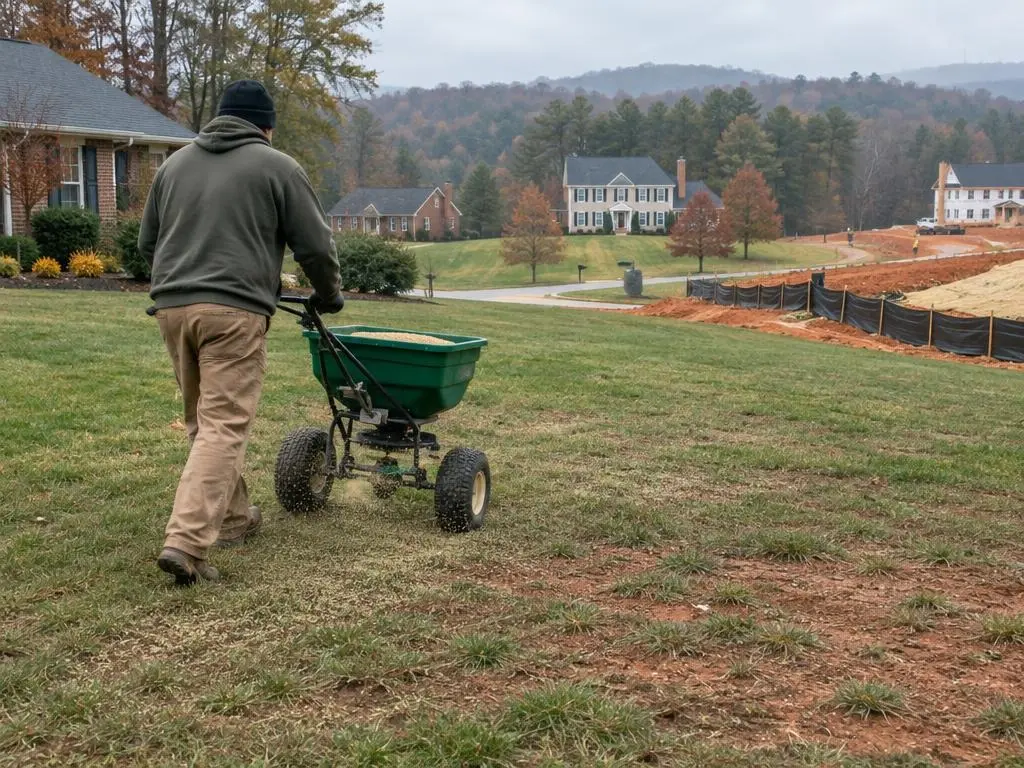
On single-family lots, the usual job is final seeding after the house is done: rough grade fixed, topsoil spread, then hydroseed and straw or mulch across the yard. On larger subdivisions we often seed in phases as streets and lots are finished, with temporary seeding on areas that will sit for a while. Temporary cover matters on red clay because exposed Cecil subsoil sheds water quickly and cuts rills in a single storm.
Commercial properties
Retail pads, office parks, warehouses and church campuses tend to have long slopes, retention ponds and parking-lot islands. We seed and mulch those areas, use bonded fiber matrix on steeper banks, and pick grass to fit the use: tall fescue for shaded, mowed lawns, bermuda for hot, sunny areas that see foot traffic, and lower-maintenance mixes for pond banks and back slopes.
Weather and scheduling
Piedmont Triad International Airport averages about 44 inches of rain a year, and June through September each average over four inches. Summer storms are when unseeded sites fail inspections. We try to get cover down within days of final grade and before forecast storms, not at the end of the 21-day window. NC DEQ's own hurricane guidance tells sites to stop new grading that cannot be stabilized before a storm arrives, and we plan seeding with that in mind.
Working with your crew
We can work off your plan sheets, coordinate with your grading contractor, and seed in sections as areas are released. Our hydroseeding services also cover fabric fence, curb and drop inlet guards and rolled erosion blankets, which saves a general contractor from juggling separate subs for each piece. Get a free estimate
Picking the right seed for the site
Site seeding is not one mix. Areas that will become mowed lawn around a building get a tall fescue blend in fall or bermuda in summer. Areas that only need to hold soil until the next phase get a quick temporary cover; NC State notes annual ryegrass can provide a weak temporary cover for a few months but is never a permanent lawn grass, and it dies back when late-spring temperatures reach about 80 degrees. Back slopes, basin banks and road shoulders that will not be mowed often do better with a low-maintenance or native grass mix. We match each area of the plan to the right seed instead of spraying one blend across the whole site.
Final stabilization and close-out
NC DEQ says the law requires surfaces to be non-erosive and stable after the activity is complete, and responsibility passes to the landowner only once the surface is permanently stabilized. Before close-out we walk the site with you, reseed any thin or washed areas, and pull silt fence where the plan allows it.
Smaller lots count too
A single house lot under an acre does not need a state-approved plan, but NC DEQ is clear that erosion and sediment control is still required and that sediment must stay on the site. Builders working lot by lot in Greensboro's infill neighborhoods and newer subdivisions still face complaints and enforcement when mud reaches the street. We seed small lots the same way we seed large sites, with the same attention to cover on slopes and around inlets.
Site Work We Seed
Permanent and temporary cover for builders, developers and property managers.
Final lot seeding
Hydroseed and mulch on finished residential lots ready for closing.
Phased subdivision seeding
Seeding streets, lots and common areas as each phase is released.
Temporary cover
Quick-growing temporary grass on areas that will sit idle, to meet stabilization rules.
Basins and swales
Seeding and matting on detention pond slopes, channels and outfalls.
Commercial grounds
Lawns, islands and back slopes around retail, office and industrial sites.
Road shoulders and right-of-way
Seed and mulch on cut and fill slopes along new streets and driveways.
Typical Costs for Larger Seeding Jobs
| Job | Published range |
|---|---|
| Per acre (LawnStarter, 2026) | $2,136 to $4,897 |
| Per acre (Fixr, 2025) | $2,000 to $4,000 |
| One acre (HomeAdvisor, 2026) | $2,600 to $8,700 |
| One acre (HomeGuide, 2025) | $5,000 to $8,500 |
| Two public bids to hydroseed a municipal park, per acre (North Little Rock, Arkansas, 2023) | $2,595 and $3,325 |
Ranges are national consumer guides and one 2023 public bid; site size, access, slopes and plan requirements change the price. What you pay is the figure on the signed quote we write after walking the site.
How a Site Job Runs
1. Plan review
We read the approved erosion control plan and seeding specs, or walk the lot with you.
2. Schedule
We set seeding dates around grading phases, inspections and the weather.
3. Seed and mulch
Permanent or temporary seed sprayed with the mulch rate the plan calls for.
4. Slopes and channels
Blankets or bonded fiber matrix where the grade is too steep for mulch alone.
5. Check and touch up
We return to reseed thin or washed spots before final inspection.
Why Choose Us for Builder Lot & Commercial Seeding
Built around the 21-day rule
We schedule to get cover down well inside the state's stabilization deadline.
Plan-aware
We seed to what your approved plan says, not to a generic spec.
Seed and erosion control together
One crew for seed, mulch, blankets, silt fence and inlet protection.
Clear invoices
Itemized by area and phase, so draws and close-outs are simple.
Builder Lot & Commercial Seeding Questions
How quickly does a graded site have to be seeded in North Carolina?
NC DEQ says graded slopes must be vegetated or otherwise stabilized within 21 calendar days of completing a phase of grading. Some local programs and sensitive watersheds require faster stabilization, so check your approved plan.
Do hydroseeding companies need to follow my erosion control plan?
They should. We use the plan's seeding schedule, mulch rate and matting details so the work passes inspection.
Can you seed outside the normal growing season?
Yes, with a temporary cover grass and mulch to hold the soil, then permanent seed in the right window. Stabilization deadlines do not wait for September.
Do you work for general contractors and developers?
Yes. We work for builders, grading contractors, developers and property managers, from single lots to multi-phase sites.
Builder Lot & Commercial Seeding Service Areas
- Hydroseeding in Greensboro, NC
- Hydroseeding in High Point, NC
- Hydroseeding in Summerfield, NC
- Hydroseeding in Oak Ridge, NC
- Hydroseeding in Stokesdale, NC
- Hydroseeding in Jamestown, NC
- Hydroseeding in Kernersville, NC
- Hydroseeding in Winston-Salem, NC
- Hydroseeding in Clemmons, NC
- Hydroseeding in Burlington, NC
- Hydroseeding in Graham, NC
- Hydroseeding in Gibsonville, NC
- Hydroseeding in Elon, NC
- Hydroseeding in Archdale, NC
- Hydroseeding in Thomasville, NC
- Hydroseeding in Lexington, NC
- Hydroseeding in Asheboro, NC
- Hydroseeding in Randleman, NC
- Hydroseeding in Reidsville, NC
- Hydroseeding in Eden, NC
- Hydroseeding in King, NC
- Hydroseeding in Bermuda Run, NC
Get a Builder Lot & Commercial Seeding Estimate
Send us your plan sheets or lot list for a site estimate.